Problem
Many design systems begin as component libraries tied to a single UI framework. Over time they accumulate additional responsibilities beyond components: tokens, themes, interaction patterns, accessibility rules, and visual semantics.
When these concerns live directly inside framework components, the framework becomes the source of truth for the design language. Supporting additional frameworks or migrating stacks often requires reimplementing parts of the design system.
This leads to duplicated styling logic, token semantics drifting between implementations, and component APIs diverging across products.
Outcome
Design a system where the design language exists independently from any UI framework.
Tokens, themes, and component styling contracts should live in a shared domain that acts as the canonical source of design intent. UI frameworks should consume these contracts through lightweight adapters that render components using framework-specific primitives.
This allows the same design system to power multiple frameworks while keeping the design language centralized and consistent.
Solution
SystemHaus introduces a domain-driven design system architecture where tokens, themes, and component styling contracts live in a framework-agnostic domain.
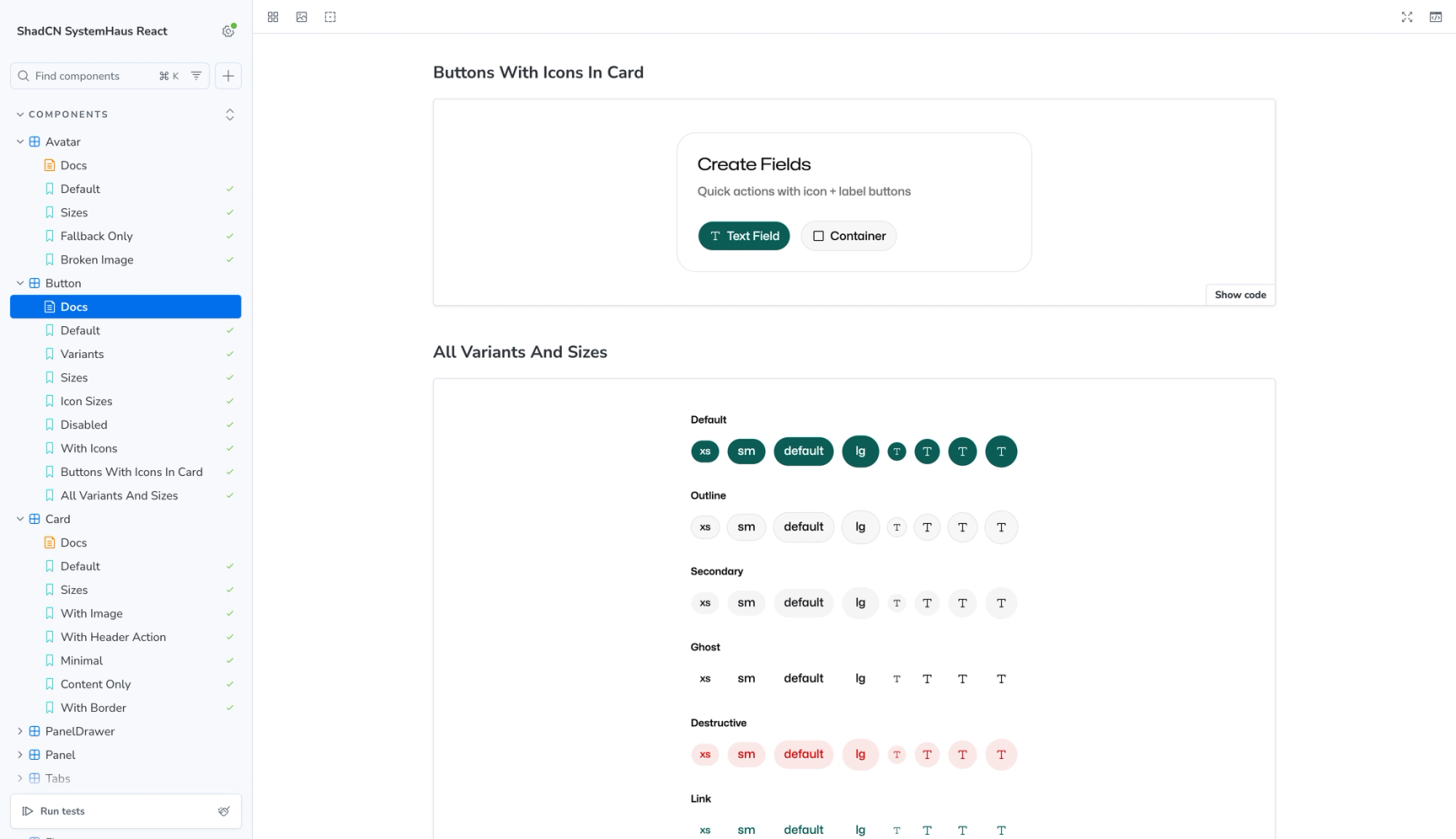
Framework adapters such as React and Vue consume these contracts and translate them into idiomatic components. The domain produces artifacts such as CSS variables, token metadata, and styling contracts, while adapters focus purely on rendering behavior.
This architecture allows multiple frameworks to share the same design system without duplicating styling logic while keeping the design language centralized.